Writing · August 2026 · 3 min read
AI won’t fix a weak innovation muscle
Notes from my SAP NOW Sydney talk on how AI changes each stage of the innovation cycle, and what it can’t change.
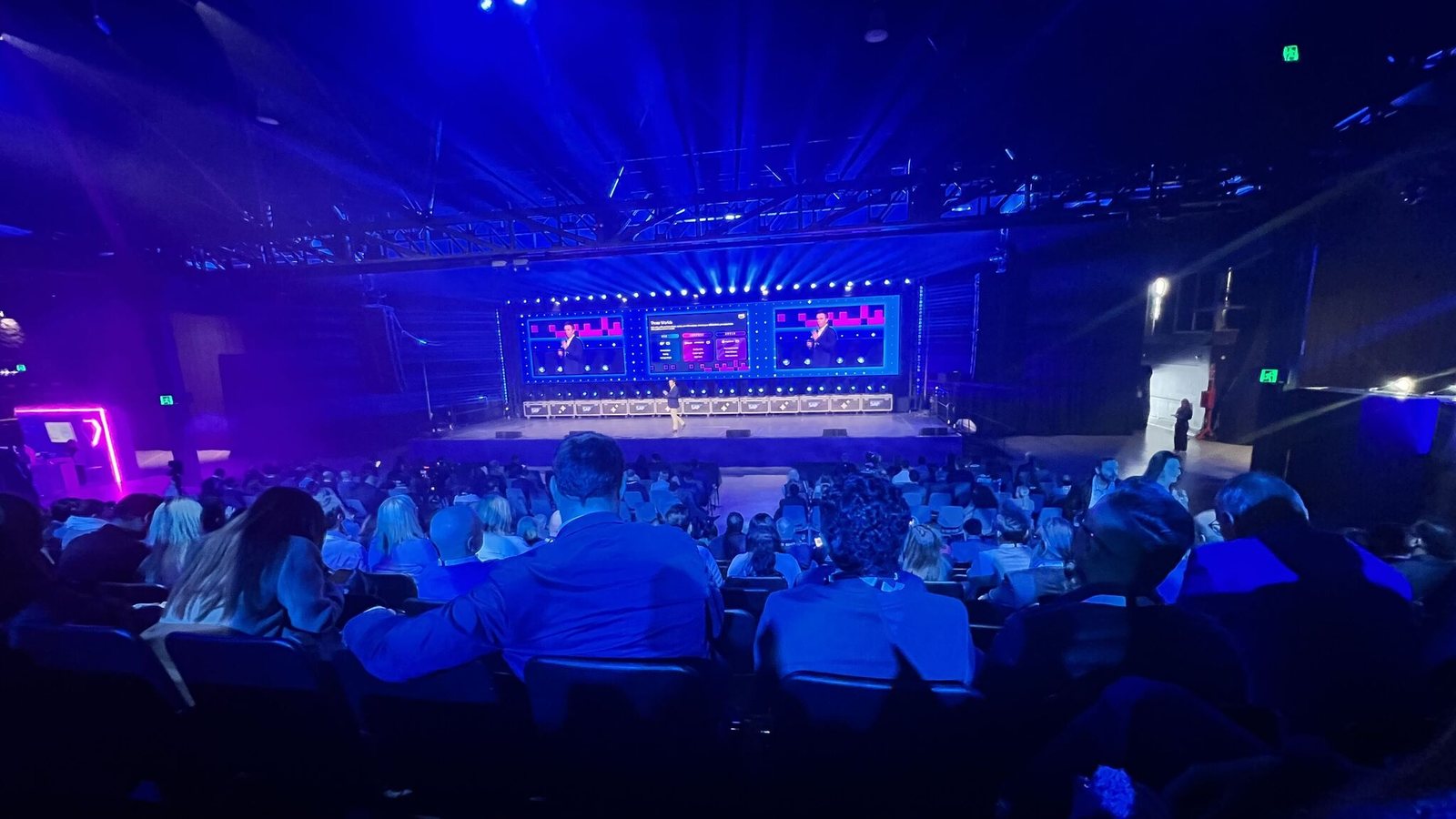
At SAP NOW Sydney this week, I talked about how AI has become part of Amazon’s innovation culture: how it’s woven into the way we ideate, experiment, launch and operate. It’s been something that’s both been ‘happening’ to us and something we’ve been thinking about a lot.
The more we work with organisations on this at Amazon Web Services (AWS), the more a pattern emerges.
“AI bolted onto a weak innovation muscle just produces more of the same, just faster.”
So how does AI help across the innovation cycle?
Ideation
AI expands the exploration space significantly. Teams can synthesise customer signals, generate hypotheses and stress-test assumptions before committing any resources. Generating ideas, however, is always the easy part. The difficult work is selecting which ideas warrant investment. AI increases the volume of options, which can be both blinding and overwhelming. The judgement to prioritise well remains your special skill. The best teams use AI to challenge their thinking rather than to validate it or to make those critical choices.
Experimentation
This is where the shift is most pronounced. Work that took weeks to prototype now takes hours. Synthetic data, rapid code generation and simulated responses have collapsed the cost of testing, so organisations can run five experiments in the time they previously ran one. The prerequisite is a culture that tolerates the four experiments that fail. AI reduces the cost of experimentation. It does not reduce the organisational courage required to experiment in the first place.
Launch
Every launch carries a long tail of deferred work: localisation, accessibility, personalisation, edge cases. AI compresses that tail. Content generation, translation and adaptive experiences mean scope that was previously cut can now ship on day one. The risk is confusing increased output with increased value. Speed without customer obsession produces faster irrelevance.
Operation
This is where AI really kicks into gear. Anomaly detection, predictive scaling and automated remediation handle the operational noise that previously consumed senior engineers. The result is that your experienced people shift from reactive firefighting to proactive thinking, and that shift creates the space for the next cycle of ideation. The crucial change, though, is to make sure that spare time is used and measured.
The foundations still matter
None of this works without foundational disciplines: a genuine obsession with the customer problem, a willingness to be wrong publicly and learn fast, and leaders who sponsor experiments even when the ROI is uncertain. Every organisation needs an innovation culture worth accelerating. Then AI can do its best work.
Here’s to another five-star SAP NOW. Absolutely outstanding.